
The most extreme thing a burnt out person can do may seem like nothing at all.
Sitting on a bench without checking your phone and just looking at what’s going on around you can make you feel strangely guilty. You might want to reply to that message or check your email. Perhaps you need to strive to improve yourself. At the very least, you should try to optimize your enjoyment in some way.
But what if the opposite were true? What if there was nothing to do at all?
The Dutch have a word for it: niksen. Literally “nothing”. Niksen means doing nothing without a purpose. It doesn’t get you results, and there are no secret hacks to increase your productivity. But science is increasingly revealing that it may be exactly what the modern brain needs.
everyone is burnt out
The world is clearly experiencing a crisis of work stress and fatigue. Global surveys have revealed high stress and persistent mental strain in the workplace, especially after the pandemic. Gallup’s 2026 Global Workplace Report found that 80% of employees around the world are disengaged from work and are experiencing increased stress, anger, and sadness. There is also evidence that burnout is prevalent among young workers. About half of Millennial and Gen Z workers feel burnt out at work.
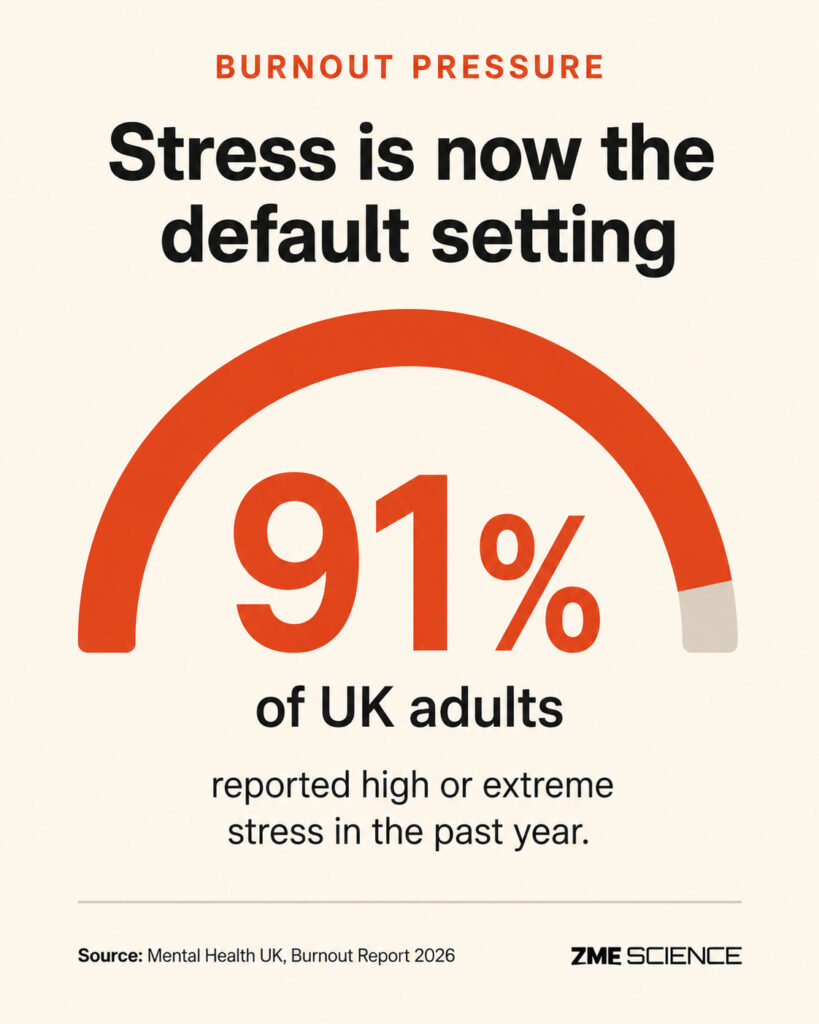
Burnout is the most extreme and chronic form of this stress. This includes mental and emotional fatigue, fatigue, insomnia, and physical symptoms such as headaches and stomach aches.
The world burns out not because we work too much, but because we forget how to relax. The economy of self-improvement, the constant hustle and bustle, seems to be ingrained in us. When we do nothing, we feel like we are failing. However, our brain strongly disagrees. Our brains seem to like to let their minds wander sometimes.
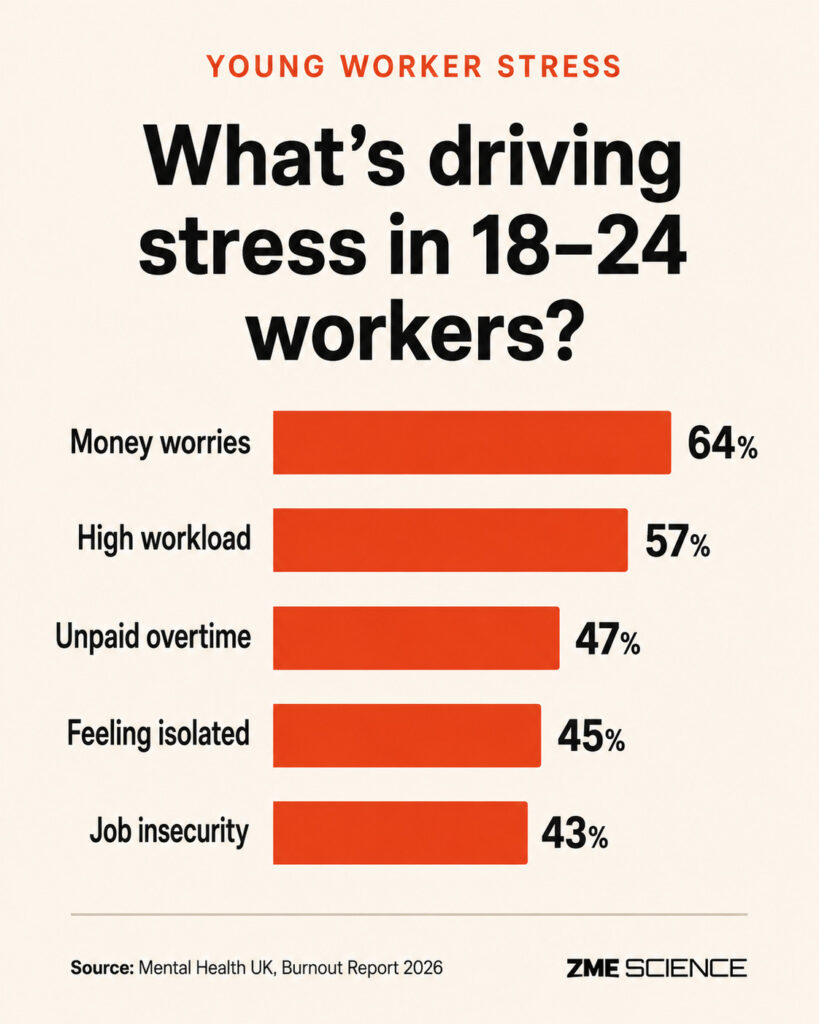
A big part of the problem is that our brains don’t have unstructured downtime. Burnout occurs not only from overwork but also from not recovering. Burnout keeps your brain locked into task mode, and your brain doesn’t like it. In fact, certain regions don’t like it.
your brain’s default mode network
The default mode network (DMN) is a network of interacting brain regions that is activated when you are awake but not focusing on anything in particular. It is very active when you are awake and resting, when you are daydreaming, when your mind is wandering, when you are recalling personal memories, and when you are envisioning the future.
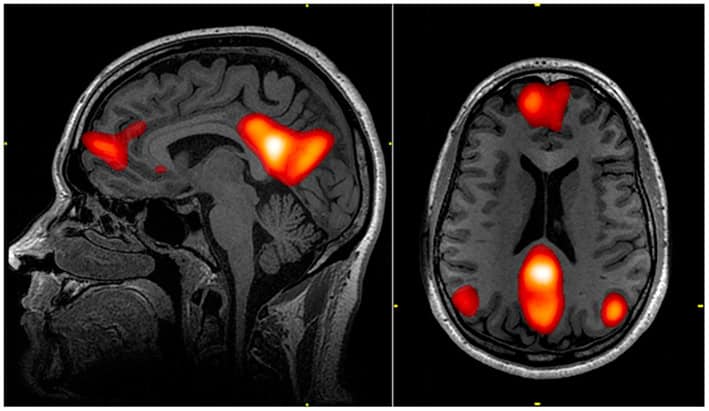
But DMN doesn’t just hang around. It relates to how we remember the past, imagine the future, and think about ourselves. The term “default mode” is misleading. It sounds passive, like a laptop dimming the screen. However, when the brain is at rest, it is metabolically taxed. Classic research by Marcus Raichle and colleagues helped establish that the brain’s baseline activity is high and that focused tasks add only a small increase compared to an already active baseline.
In fact, your brain uses a lot of energy when you’re resting (almost as much as when you’re actively thinking about something), and the DMN is a big part of that. DMN does a lot of work during that time.
So basically, when you stop focusing on a task, your brain doesn’t shut down. Simply switch modes.
During normal downtime, the DMN begins supporting memory processing and semantic recognition. But under chronic stress, those same inward mechanisms can be hijacked by rumination, or repetitive, negative thought loops. You lose sight of meaning and become overwhelmed by negative thoughts. It may be familiar.
That’s where Niksen comes in.
Your Brain on Niksen
Niksen became internationally famous, especially in 2019 by author Olga Mecking. new york times In her essay “The Case for Doing Nothing,” she encouraged readers to “stop being so busy.” Mecking then wrote a book about Niksen, and the concept began to gain public attention, despite its mixed reviews.
But is this really backed by science?

term Niksen As such, it doesn’t really appear in scientific papers. This is a cultural term, not a scientific term. However, the concepts that Niksen encompasses have been studied.
The 2025 PLOS ONE longitudinal study followed working-age adults in the UK over two pandemic lockdown periods. The results showed that people who were able to psychologically detach from work were happier, had less anxiety, and had higher life satisfaction one year later. Whatever the cause, burnout is a serious problem.
“Interventions that encourage workers to psychologically disengage from work may help support employee health at all times, not just during extreme circumstances such as a pandemic or economic uncertainty,” the researchers concluded.
A 2024 Frontiers review argues that boredom and curiosity go hand in hand as drivers of information seeking. The results showed that boredom acts like a “hunger” for stimulation, while curiosity acts like an “appetite” for specific information. Allowing your mind to wander (something many people consider “boring”) is the brain’s way of processing information and restructuring itself. Another study in 2024 found that “free-flowing mind wandering” helps foster creativity.
There are studies that show how burnout affects us and how letting your mind wander can help. These (and several other studies with similar conclusions) are recent studies. We are now discovering how beneficial it is to let our minds wander.
breakthrough brain
A classic 2012 study often cited in the Nixen discussion found that people who performed demanding tasks during the latency period performed better at subsequent creative problem solving than those who did less demanding tasks, rested, or took no breaks.
This goes back to the same idea mentioned earlier. So when your mind wanders, your brain isn’t actually switching off. It just works in a different way.
If you’ve ever been struggling with a problem and then the answer “magically” appears in your head after a break or sleep, you’ve probably experienced it. You weren’t consciously thinking about the problem, but your brain was working on it in the background.
Cognitive scientists call this incubationand it has been demonstrated in various studies. However, it was French mathematician Henri Poincaré who gave the most influential explanation of creative incubation.
Like all mathematicians, Poincaré had his moments of impasse. In one particular episode, he felt completely stumped by an issue. Then he went on vacation. While on the bus, in the middle of a conversation, he came up with a solution. Nothing from the outside gave him any clues, it was his mind wandering that figured it out. Poincaré argued that unconscious work continues even after deliberate effort ceases, and that distance can bring hidden combinations to the surface.
His observations were surprisingly spot-on. Just because we stop forcing things doesn’t mean the mind stops working. That’s why breakthroughs often happen while you’re walking, taking a shower, riding the train, or doing nothing by the window. Occasional breaks are not free time.
When you move away from focused effort, your brain shifts from performance mode to a slower, more associative state. Instead of marching down one narrow path, attention begins to walk. Memories, images, half-baked ideas, and old observations can collide in new ways. It is a quiet gift of rest. It gives your brain room to continue thinking without feeling pressured to respond to commands.
Why Niksen?

This doesn’t mean boredom is always good. Chronic boredom can take its toll, especially in a dead-end job or a lonely life. Niksen doesn’t mean sitting in a state of misery, with anxious thoughts swirling around you. For people with severe anxiety, depression, trauma, or acute burnout, endless laziness can become rumination.
But Niksen isn’t just doing nothing. It’s not about improving yourself, recharging for more work, or squeezing hidden productivity out of pauses. Niksen is meant to make your brain wander.
If you feel overwhelmed by bad thoughts, an anchor may help. Something that allows you to be mindful in the present moment. Look at the trees and people around you. Doing something absentmindedly (like knitting or doodling) can be effective. You can also do it while doing light training such as running.
Niksen intentionally creates a gap between effort and recovery. It should feel effortless, like when you were a kid exploring things.
How can I do nothing?

Niksen’s first rule is boringly simple. It means to stop trying to do well.
There is no such thing as a perfect posture. There is no competition. This isn’t a productivity secret disguised as rest. stop trying to make it correct.
Then start small. A good starting point is 2 minutes. Look out the window. actually look. What do you see? Let’s think about it for a moment. Does it remind you of something or is it aesthetically pleasing? Let your eyes wander without looking for anything.
Nixen is also perfect for sitting on a bench. If you can do it in a park or near the water, even better. You can also do it at a cafe while taking in the smells and hustle and bustle of the place. As long as you don’t let your brain wander and look at your phone, you’re golden.
It may feel uncomfortable at first. A culture of burnout may try to make you feel guilty. You might panic when you realize you have a deadline coming up or a shopping list to complete. I don’t write the email itself.
Leave it as is.
Focus on what’s around you and listen to your sensations. The key is to avoid the objective.
Nixen is perfect for the most ordinary little nooks and crannies: between emails, after lunch, before opening your laptop, while waiting for the kettle, after completing a difficult task. A good Niksen moment ends without fireworks or a big revelation. Your nervous system will be a little softer and ready to deal with the rest of your day.
There is no silver bullet
Niksen is a personal solution and is not designed to solve social problems. You can’t replace managers who think fair wages, humane staffing, paid time off, predictable schedules, childcare, psychological safety in the workplace, or mental health and burnout are unrealistic.
But Niksen is also a bit about rebellion. It challenges the idea that human worth depends on the performance of work, and is most effective when treated as a personal practice and as a cultural critique.
Niksen’s promise isn’t that you’ll do more and feel better by doing nothing. It seems like a crazy promise, but its roots are rooted in science. Because maybe, just maybe, it’s not the individual that’s broken. It’s a machine.
And in a burnt out world, it could be the beginning of recovery.
#Dutch #Niksen #art #solution #modern #burnout