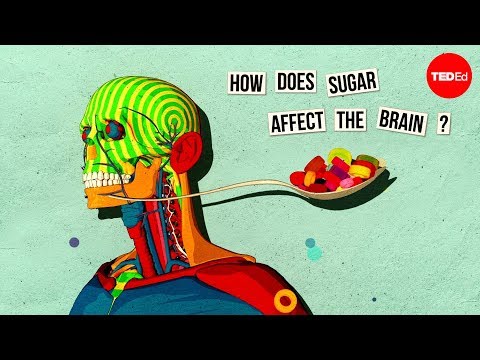
Our love of sugar once helped our foraging ancestors reap more benefits from rare, high-energy foods.
Today, we’re bringing us back to the store at 10pm to satisfy your cheeky chocolate cravings.
We do this even though we know a lot of physical and metabolic risks. excess sugar, obesity, diabetes, etc. tooth decayand even memory loss.
But how much damage can you reverse by changing your diet?
It is possible, but likely only partially, to reverse the cognitive effects of sweet diets in rodents, according to a new systematic review and meta-analysis.
Some disorders persist even after adopting healthier eating habits.
Reducing sugar intake may improve memory in rodents previously fed a high-sugar diet, but it does not restore memory to the same level as that of their peers who were fed a consistently healthy diet, the study found.
Previous studies have linked high-fat, high-sugar (HFHS) diets to a range of neurocognitive and behavioral effects, but it remains unclear how long these effects persist when diets are modified.
For the new study, researchers analyzed the results of 27 preclinical studies, including controlled experiments in rats and mice, in hopes of uncovering how transitioning from a HFHS diet to a healthier diet affects cognition.
“Our findings show that improving diet quality can have a positive effect on memory,” says lead author Simone Lane, a biopsychologist at the University of Technology Sydney (UTS) in Australia.
“However, those improvements were incomplete; even after several weeks on a healthy diet, memory did not return to the levels seen in animals that had never eaten an unhealthy diet.”
By conducting a systematic review and meta-analysis, Lane and colleagues sought to uncover broad patterns emerging from more than 20 studies.
Although they focused on eating and memory, they also tracked other potential indicators of cognitive effects, such as general activity, motivation to eat, and behaviors like anxiety and depression.
Among rodents fed an unhealthy diet for at least two weeks, those switched to a healthy diet for at least 24 hours consistently performed better on memory tests than those who continued to eat junk food, the study found.

Other cognitive measures did not show consistent improvements associated with dietary changes, suggesting that the effects are specific to memory.
Memory effects varied by diet subtype, with significant improvements seen in models using high-fat diets, but not with high-sugar or HFHS diets.
“We found that memory improved more clearly after replacing high-fat foods with healthy foods,” Lane says.
“However, sugar-rich diets, which included meals high in both fat and sugar, showed little evidence of recovery. This suggests that sugar may be an important factor limiting memory recovery.”
The rodent model helped isolate the effects of diet on memory, explains senior author Mike Kendig, a biopsychologist at UTS.
“In humans, changes in diet usually occur in parallel with changes in exercise, mood, and daily living, so it is very difficult to distinguish the effects of diet alone on brain function,” Kendig says.
All of this appears to center around the hippocampus, a brain region that plays a key role in memory and learning and is involved in regulating appetite.
The HFHS diet in humans has previously been associated with decreased hippocampal volume and function, and new research supports this association.

“Our findings suggest that dietary reversal improves spatial memory that relies primarily on the hippocampus, highlighting evidence that the hippocampus is particularly sensitive to changes in diet and other environmental factors,” the researchers write in the new study.
Despite having memory problems, the important thing is not to despair over the amount of sugar you have eaten so far, but to be aware of the great risks associated with it and reduce your sugar intake sooner rather than later.
RELATED: Common Sweeteners Damage Critical Brain Barriers and Risk of Stroke
“There is a general idea that the effects of an unhealthy diet are easily reversible. These results suggest that, especially with sugar-rich diets, the picture may be more complex, at least when it comes to memory,” Kendig says.
“There is still value in improving diet quality, but protecting brain health may also depend on avoiding long-term exposure to unhealthy diets, rather than assuming that the effects are always fully reversible.”
This study nutritional neuroscience.
#Largescale #review #reveals #sugary #meals #affect #memory