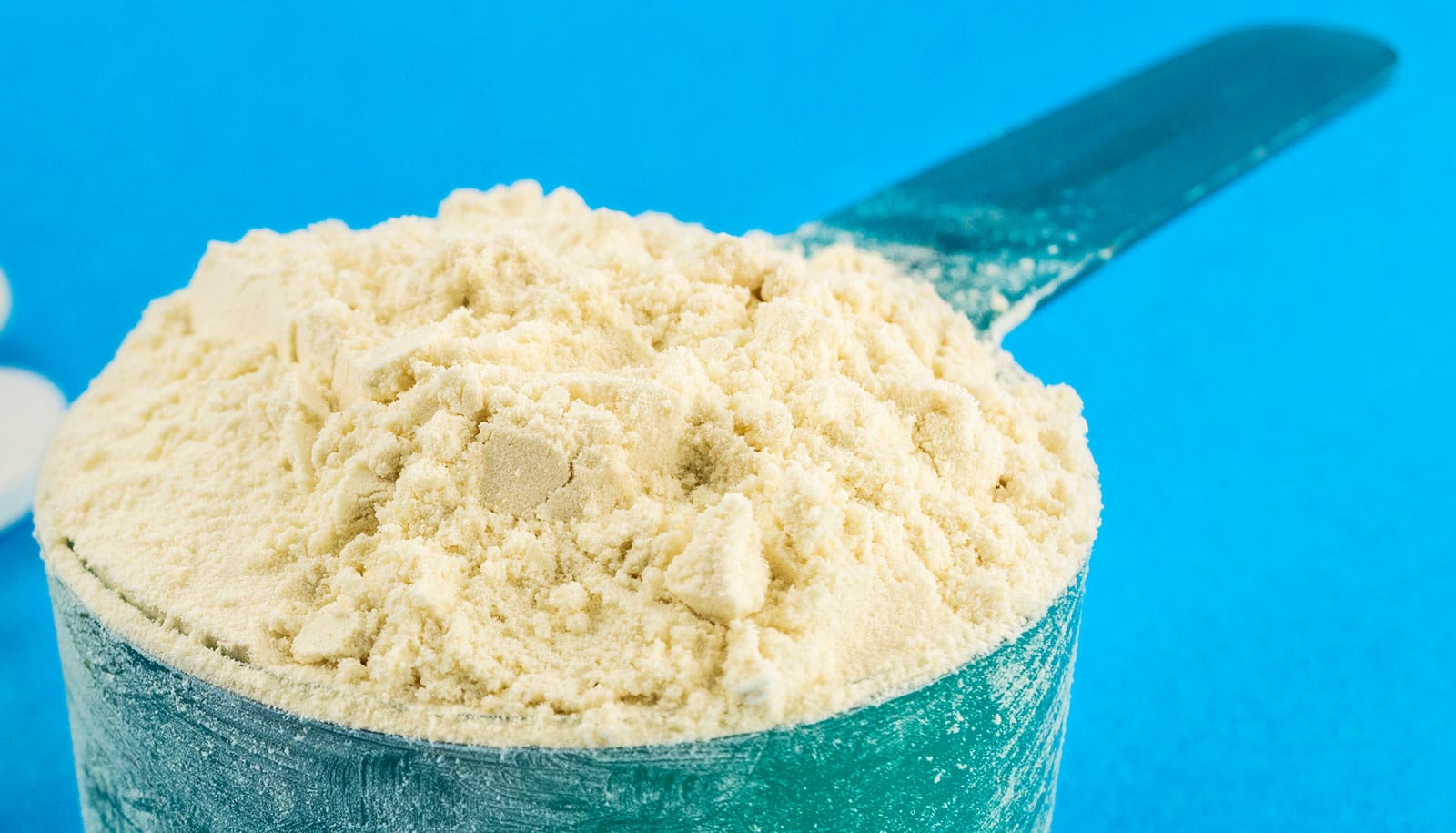
Exercise is better than protein powder for building muscle strength in older adults, according to a new study.
Packing protein is all the rage. From cereals to pasta to nacho chips and more, food manufacturers try to get as many nutrients into their products as possible, and one of the touted benefits of protein is that it increases muscle mass and strength.
It may catch the eye of older adults. Muscle strength inevitably declines with age, which can have serious consequences such as falls and loss of the ability to live independently.
But seniors can probably skip the protein-enriched milk the next time they drink a Starbucks latte. American Journal of Clinical Nutrition It turns out that protein alone does not improve muscle strength.
In fact, as long as you’re getting the normally recommended amount of protein in your diet to begin with (as most older Americans do), older adults are better off hitting the gym if they want to keep their muscles looking youthful, says lead author Lisa Ceglia, an endocrinologist, associate professor of medicine at Tufts University School of Medicine, and postdoctoral fellow at the Gene Mayer Center for Human Nutrition at the USDA Center for Aging Research (HNRCA).
Ceglia worked on the study with colleagues including Bess Dawson-Hughes, HNRCA senior investigator and professor of medicine.
A gradual decline in muscle strength begins around age 40, when the kidneys begin to lose their ability to effectively eliminate acid from the body. Just as baking soda neutralizes vinegar, your body begins to break down your muscles and release basic substances that neutralize the acid.
Past research has come very close to showing that adding protein to older adults’ diets can reduce muscle loss. Protein increases the growth factors that start that process, and protein has been shown to increase muscle strength when combined with exercise.
But until recently, scientists have not been able to rigorously test whether adding protein alone can limit muscle loss in healthy, well-fed people.
“So you start saying, yes, it makes a lot of sense in theory, but let’s look at the reality,” Ceglia says.
To test the benefits of protein alone, she and her colleagues recruited 141 study participants, all of whom lived in the Boston metropolitan area and were over 65 years old, and had some of them ingest capsules containing whey powder and others a placebo control.
Whey, made from milk, is rich in an amino acid called leucine, which is particularly good at activating cellular pathways that build muscle. Although other types of protein supplements (such as soy) may have different effects, researchers thought whey was most likely to lead to muscle growth.
Along with whey powder, researchers gave participants potassium bicarbonate, an ingredient in antacid tablets. The researchers reasoned that if acid buildup was the cause of muscle weakness, neutralizing the acid with potassium bicarbonate could help muscles recover. A small study suggested they might be right.
After 24 weeks, the researchers tested the study participants’ strength with a variety of exercises, from leg presses to balance tests. The results were unexpected. The additional protein, with or without potassium bicarbonate, did not change the participants’ fitness. These results were the same regardless of participant gender.
“We were surprised,” Ceglia said. Especially since tests showed that the participants’ bodies were primed to build more muscle. Like younger people, they excreted more acid and had elevated levels of a muscle-building hormone called IGF-1.
So why didn’t they gain more muscle? “This is a great question and one I’ve been asking myself,” Ceglia says. The study participants’ muscles may have undergone subtle changes that were too sensitive to be detected by muscle tests. It’s also possible that without additional exercise, the participants’ bodies didn’t know what to do with the extra protein.
People who have recently incorporated more exercise into their routine may benefit from protein supplementation. Other groups may also benefit, such as people who become malnourished after severe injuries such as femoral neck fractures. For this reason, a protein-rich drink called Boost is sometimes prescribed to people who have lost their appetite after surgery.
“However, if you are a healthy individual who lives in the community and consumes the recommended daily amount of protein, there is no evidence that protein supplementation alone has a significant impact on your physical fitness and function,” Ceglia says.
In the future, Ceglia would like to investigate the combination of exercise and protein supplementation to see if combining the two is more effective than exercise alone. In the meantime, she recommends that seniors do strength training to stay fit.
“This is the most consistently effective option we have for improving strength and function,” she says.
Source: Tufts University
#Exercise #beats #protein #powder #muscles #young