High-dose vitamin D3 supplementation during pregnancy was associated with improved verbal and visual memory. Credit: Aknarin Thika on Pexels
Prenatal supplements nourish both mother and baby, replenishing vitamin and mineral deficiencies in the mother while supporting a healthy pregnancy and strong fetal development through all stages of pregnancy. Scientists have found that a little extra vitamin D supplementation can go a long way in helping children learn new words and improve their ability to remember patterns and locations.
A randomized clinical trial conducted in Denmark on 623 mother-infant pairs found that women who took higher doses of vitamin D3, 2,800 IU per day, compared with the standard dose of 400 IU per day, had children who performed better on visual and verbal memory tests at age 10.
However, this study did not identify a clear threshold of maternal vitamin D levels above which significant improvements in child developmental outcomes were observed.
The survey results are JAMA network open.
Sunshine vitamins for a bright brain
Modern indoor lifestyles, geographic location, air pollution that blocks sunlight, and several other factors contribute to the increasing trend of vitamin D deficiency in a large portion of the population. This trend has the potential to significantly increase the global disease burden.
Essential for overall health, vitamin D supports strong bones by helping the body absorb calcium, maintains a healthy immune system, proper muscle and nerve function, and several other important body functions. During pregnancy, it also plays an important role in brain development.
Does vitamin D during pregnancy affect a child’s brain development years later? Several animal and human studies suggest that vitamin D during pregnancy may shape a child’s brain development and future mental health. However, no clinical trials have verified this.
The study recruited 700 mother-infant pairs, but excluded women who were already taking high amounts of vitamin D or who had other health problems, such as heart or kidney disease. The women were then randomly divided into two groups.
One person received a standard dose of 400 IU of vitamin D3 per day, and the other received a much higher dose of 2,800 IU per day. They took the supplements from week 24 of pregnancy until one week after giving birth. The children were followed until they were 10 years old, after which they were asked to return for follow-up, with 498 of them coming for a two-day health check.
On the first day, the children spent two hours playing brain games and puzzles that target 11 cognitive functions, including memory, IQ, and attention. The next day, the team performed an MRI scan to take a closer look at the brain’s structure.
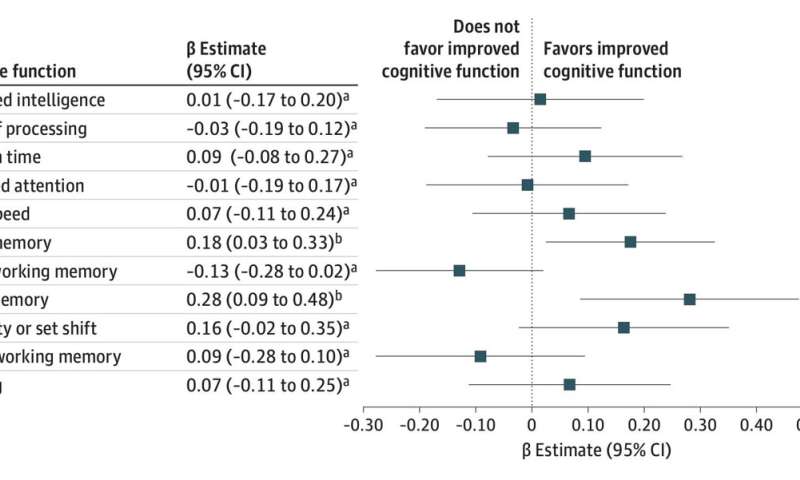
Forest plot showing the association between high-dose and standard-dose vitamin D3 supplementation during pregnancy and cognitive function at age 10 years. credit: JAMA network open (2026). DOI: 10.1001/jamanetworkopen.2026.11464
The study found that children whose mothers took high doses of vitamin D3 during the second half of pregnancy performed better on certain verbal memory tests (recalling words and language-based information) and visual memory tests (patterns and locations) compared to children whose mothers took standard doses of vitamin D3. However, extra vitamin D had no effect on overall IQ, alertness, or reaction speed.
This randomized controlled trial adds to the existing evidence of an association between prenatal vitamin D exposure and childhood cognition. The results of this study may help shape recommendations regarding prenatal nutrition and pregnancy care, especially for populations at high risk of vitamin D deficiency.
#prenatal #vitamin #change #child #remembers #words #patterns #places