
Insightful new techniques have been developed to treat depression.
Millions of adults in the United States use antidepressants like Prozac, but side effects such as weight gain and sexual dysfunction can make the drugs an unpleasant option.
But a new drug-free treatment has surprisingly shown itself to be just as effective as one of the most commonly prescribed pills.
Selective serotonin reuptake inhibitors (SSRIs) like Prozac block the brain’s absorption of serotonin and stabilize mood, but they can also dull emotions and cause difficult withdrawal symptoms for some people.
This prompted researchers to develop a less invasive method using clear contact lenses that uses built-in electrodes to send gentle electrical signals to areas of the brain associated with depression and mood.
This particular treatment showed mood and behavioral improvements comparable to Prozac when used in mice for 30 minutes per day for three weeks.
The findings, published in the journal Cell Reports Physical Science, focused on a method of stimulating the brain called temporal interference.
This sends two electrical signals to the retina and becomes active only when these electrical signals intersect at the back of the eye. This means that the treatment targets only specific areas of the brain.
Lead author Chan Eun Park of Yonsei University likened this to two flashlights.
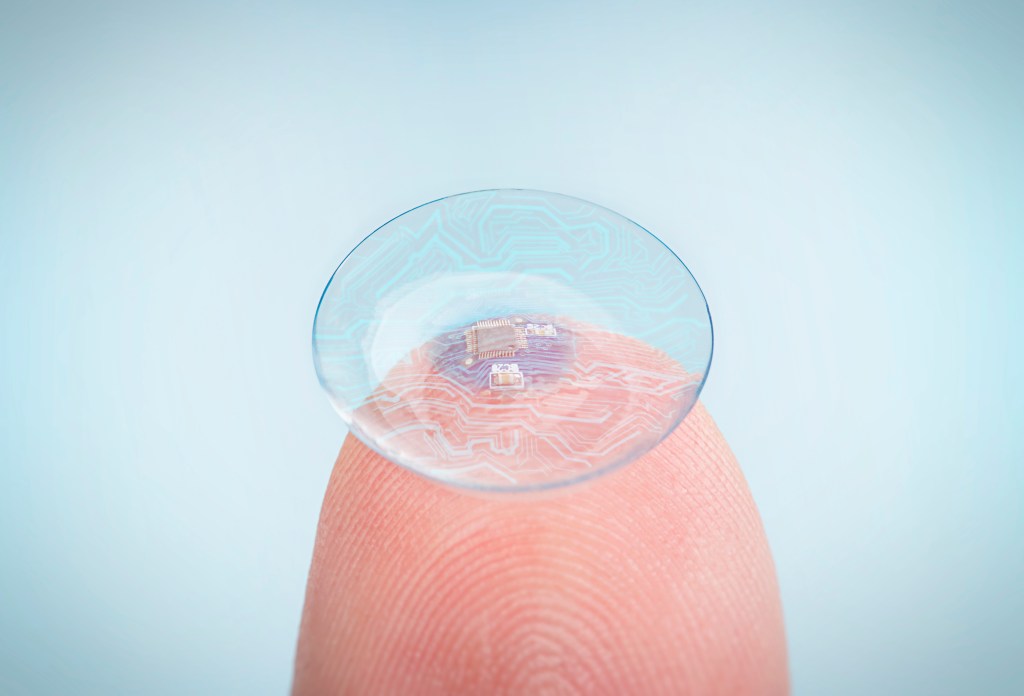
“Each beam alone is dark, but when the beams overlap, a bright spot appears, and that bright spot can be created far away from the flashlight itself,” Park said in a press release. “Our contact lenses do the same thing with two harmless electrical signals.”
To make the lens transparent and flexible, the researchers created electrodes from ultrathin layers of platinum and gallium oxide (a conductive material).
They then tested the lenses among four groups of mice: mice that received temporal interference, mice that received fluoxetine (the active ingredient in Prozac), depressed mice that received no treatment, and non-depressed controls.
Signs of depression, as measured by behavior, brain electrophysiological recordings, and blood and brain biomarkers, were all reduced by contact lenses.
Specifically, the treatment lowered levels of inflammatory molecules in the brain, lowered blood corticosterone (cortisol in humans) by 48%, and increased serotonin by 47%.
Connections between the hippocampus and prefrontal cortex lost during depression were also restored, as seen in brain activity recordings.
The lenses were so effective that machine learning models that asked them to group mice based on behavior, brain activity, and biomarker levels consistently grouped the contact lens-treated group with the non-depressed control mouse group.
The team’s next step is to take the technology through rigorous testing and evaluation and modify it for human treatment.
“Next, we plan to make the lens completely wireless, test its long-term safety in large animals, and customize stimulation for each user before moving on to clinical trials in patients,” Park said.
And the researchers hope this innovative method can be applied to multiple conditions.
“We believe this wearable, drug-free approach has great potential to transform the way we treat depression and other brain diseases, including anxiety, drug addiction, and cognitive decline,” Park said.
#Techsavvy #contact #lenses #effective #Prozac #treating #depression #eyeopening #study