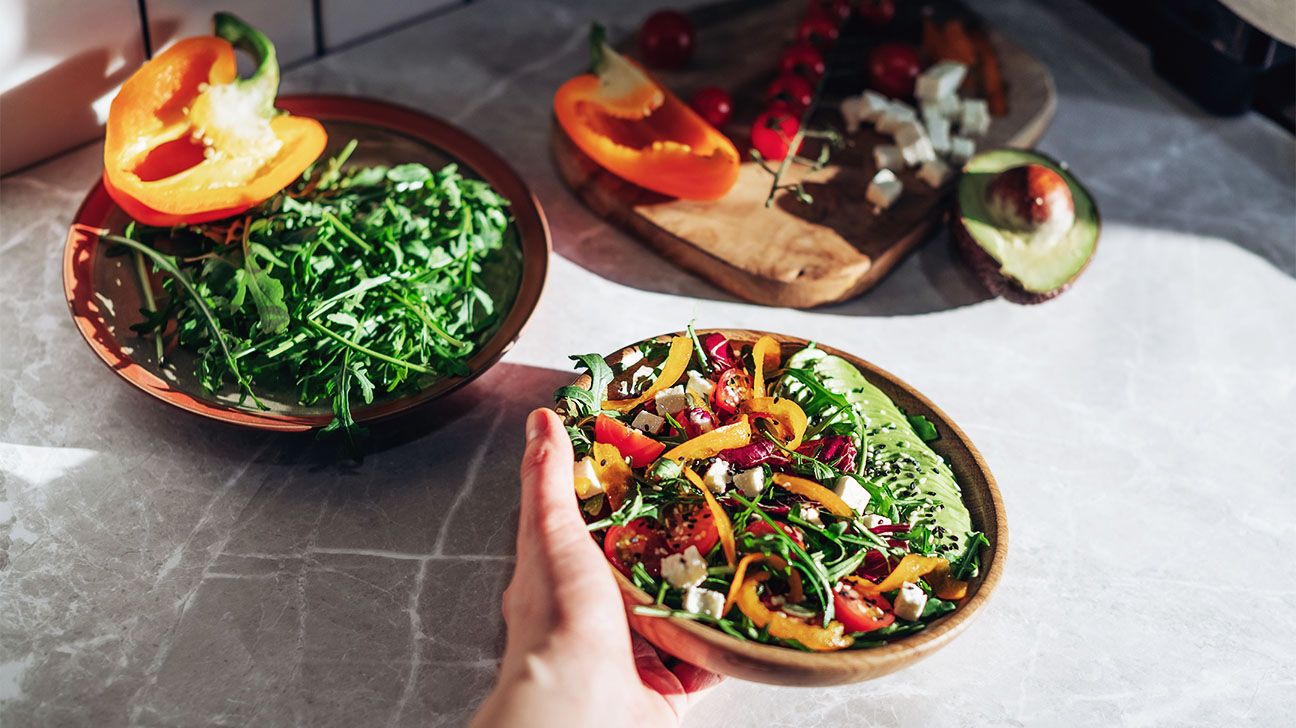
- A new study has found that a diet rich in plant foods and low in processed meat and salt may help with weight gain during menopause.
- Plant foods contain nutrients associated with metabolic health and gut microbiome health.
- Experts recommend starting a plant-forward diet with foods you already enjoy.
Weight gain is common during menopause, a life stage that involves major changes in the body.
The study, conducted by researchers from Harvard University and the National University of Singapore, tracked eating habits and weight changes during the perimenopausal and postmenopausal periods.
The findings suggest that adopting certain healthy eating patterns, especially ones rich in plant foods and low in processed meats and salty snacks, may help women better manage their weight during this transition period. The study was published in the journal May 20th.
This study provides important insights for women and health care providers seeking effective strategies to support metabolic health in midlife and beyond.
The study builds on the Nurses’ Health Study II, a large-scale, ongoing research project begun in 1989 and involving female nurses from across the United States.
For this particular study, researchers focused on women going through menopause and followed them for about 12 years, from six years before to six years after their reported menopause. More than 38,000 women participated.
Menopause was defined as the point at which a woman stopped menstruating for at least 1 year.
Every four years, participants completed a detailed food questionnaire that recorded their usual intake of various foods.
The research team analyzed these responses and calculated scores for 11 different dietary patterns.
These patterns included familiar diets such as the Mediterranean diet, DASH diet (designed to lower blood pressure), and plant-based diets, as well as newer approaches such as the Planetary Health Diet, which emphasizes sustainability and heart health.
They also looked at diets categorized by their effects on insulin and inflammation, and looked at intake of ultra-processed foods.
Participants self-reported their weight every two years, and the researchers calculated each woman’s annual weight gain or loss over the study period. They also tracked which women became obese during the follow-up period.
To ensure accurate results, researchers considered factors such as age, race, income, physical activity, smoking, use of hormone therapy, and baseline weight.
The study found that participants’ diets were strongly associated with differences in weight gain and obesity risk during menopause.
People who followed healthier eating patterns, such as plant-based diets, Mediterranean diets, DASH diets, and especially the Planetary Health Diet, tended to gain less weight over time than those who ate less healthy diets.
Overall, the authors say, these healthy diets are generally rich in fruits, vegetables, whole grains, nuts, and legumes, and low in red and processed meats, salty foods, and fried snacks such as potatoes and french fries.
One particularly important finding was the role of diet in keeping insulin levels constant.
Researchers used a score called the Empirical Dietary Index of Hyperinsulinemia (EDIH) to assess how different diets affect insulin in the body and found that diets with a lower likelihood of raising insulin were associated with minimal weight gain and minimal risk of obesity.
On the other hand, foods that tend to raise insulin levels, such as red and processed meats, salty snacks, and fried potatoes, were associated with more weight gain.
A planetary health diet is your best defense against obesity
They further noted that the Planetary Health Diet stands out as offering the greatest protection against obesity.
This diet emphasizes sustainable eating, focusing on plant-based proteins like nuts and legumes, healthy fats, whole grains, and plenty of fruits and vegetables, while limiting red meat and refined carbohydrates.
Women who scored high on the Planetary Health Diet had the lowest risk of obesity throughout the study.
Ultra-processed foods led to weight gain
The researchers also observed that consumption of ultra-processed foods, such as packaged snacks and sugary drinks, was associated with weight gain and increased risk of obesity.
This supports previous research suggesting that limiting highly processed foods is beneficial for weight management.
Additionally, this study emphasized that not all low-carbohydrate diets are the same.
People who rely on healthier fat and protein sources, such as plant protein and unsaturated fats, seem to be protected from weight gain, while diets high in animal fats and protein are associated with further weight gain.
Overall, the results of this study paint a clear picture. So a diet rich in whole, plant-based foods and low in processed meats, fried snacks, and salty foods may help women maintain a healthier weight during the hormonal and metabolic changes of menopause.
Jennifer Parian, a registered dietitian, food scientist and founder of Foodes, who was not involved in the study, said weight management can be difficult during menopause as your metabolism slows down.
She explained that when female hormones such as estrogen decrease, fat storage in the abdomen can begin to increase.
“Reduced physical activity, westernized eating patterns, and emotional eating may further contribute to weight gain and metabolic dysfunction at this stage of life,” Parian told Healthline.
Plant-forward diets are low in calories per volume, high in fiber and water, and are useful for menopause because they help women feel satisfied and reduce energy intake.
Fiber in particular helps regulate your appetite and help you feel full, Palin said, because it slows intestinal transit time and forms a thick gel that absorbs water and keeps you feeling full longer.
“Fermentation of fiber by gut bacteria also produces short-chain fatty acids that can stimulate hormones involved in appetite regulation and gastric emptying,” Parian said.
A diet rich in fruits, vegetables, legumes, and plant polysaccharides may promote increased bacterial diversity and levels of beneficial bacteria in the gut, which are associated with improved metabolic health and reduced inflammation.
“Saturated fat intake may be another important factor,” she says. “Saturated fats, commonly found in animal foods, can impair insulin signaling and cause insulin resistance.”
Plant-forward diets that are naturally low in saturated fat are associated with improved insulin sensitivity.
Plant-forward diets are also associated with reduced trimethylamine-N-oxide (TMAO) production.
Parian explained that TMAO is produced when gut bacteria and the liver metabolize certain compounds found in meat, and that it involves:
In contrast, a plant-first eating pattern has countless health benefits.
“Researchers also observed that the higher the ratio of vegetable protein to animal protein, the better the maintenance of lean body mass in menopausal women.”
Avery Zenker, a registered dietitian with MyHealthTeam who was also not involved in the study, said the best way to start eating more plant-based foods is to add, not subtract.
“That may mean going completely plant-based right away, or it may mean simply reducing your meat intake,” she said. “Even small changes can reap health benefits.”
Zenker suggested starting with foods you already enjoy.
You can also look at recipes and cookbooks online for inspiration and learn how to make your own plant-based meals. Also, do not forget to use herbs and spices. Because they contain unique nutritional and flavor benefits.
Don’t know where to start? Try new plant-based foods at restaurants. “This will help you explore new foods, find out what you like, and incorporate them into your home meals,” Zenker says.
If you’re concerned about not getting enough nutrients from a plant-based diet, nutritional supplements may help prevent deficiencies. Zenker said vitamin B12 and vitamin D are two to consider, especially if you’re following a completely plant-based diet.
You may also need to be more intentional about getting enough calcium, iron and zinc, Zenker notes.
“Focus on whole foods and plant-based foods and limit ultra-processed foods,” she said. “Plant-based processed foods such as meat substitutes can be helpful, but in excess they can lead to poor eating habits.”
Finally, if you need additional support, Zenker suggested consulting a dietitian.
“A nutritionist can help make sure you’re supporting your health goals, meeting your nutritional needs, and enjoying your diet in a sustainable way,” she said.
It may also be helpful to find support groups in your community or online.
“Connecting with other people who are choosing a more plant-first eating pattern can make it easier and more enjoyable,” Zenker says. We also help with recipes and suggestions for products and restaurants.
#Plantforward #diet #menopausal #weight #gain