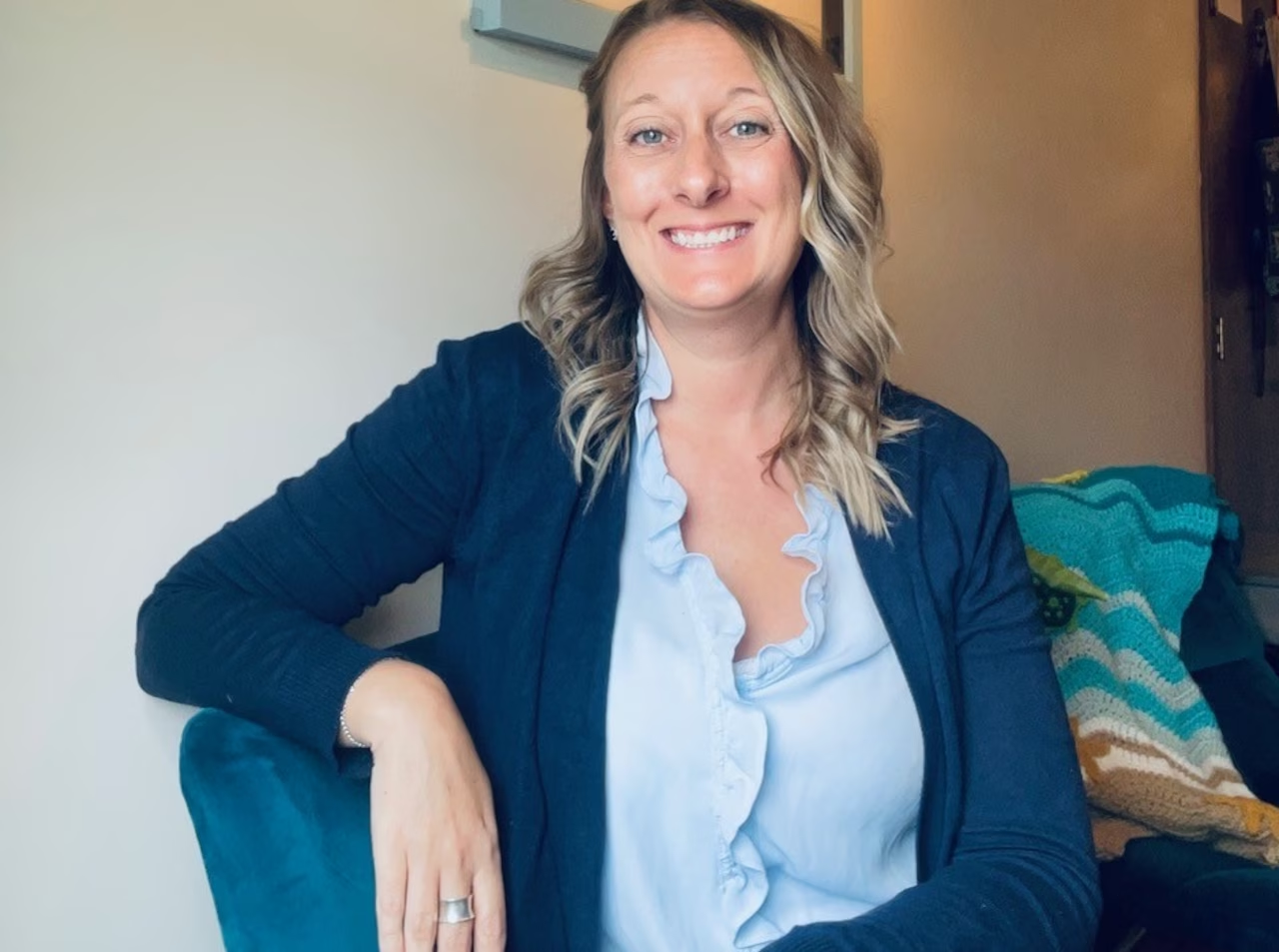
CLEVELAND, Ohio — The first thing an Ohio therapist saw was a bill.
It comes from CareSource, Ohio’s largest Medicaid managed care plan, covering more than 1.4 million members.
In April, the Dayton-based organization told some behavioral health providers that the therapists would have to pay back the money because they were paid so much for treating Medicaid patients.
It’s not just a little money. It’s for 2 years.
For some therapists, repayment demands ranged from $6,000 to more than $100,000. Marriage and family therapist Noelle Chappelle is $95,000 in debt, and she said she would close her Beachwood practice if she takes a financial hit.
“Our profit margins are so thin that I would have gone out of business,” Chappelle said.
Then the second blow occurred. CareSource said many behavioral health providers will now receive less compensation than they have received for years.
CareSource’s clawback request and future payment changes stem from the same issue. The group said it was paying some providers the full state maximum, even though Ohio Medicaid rules require many behavioral health providers, including independent social workers, professional clinical counselors, and marriage and family therapists, to be paid 85 percent of that amount.
In other words, CareSource is saying it is correcting the mistake. The providers claim the company made such mistakes for years, giving them reason to believe the high payments were appropriate.
This combination—huge repayment demands and subsequent reductions in future payments—prompted a furious backlash from the mostly independent therapists and social workers who treat Medicaid patients in Ohio.
In less than a month, they organized an explosion of publicity on social media, a rally outside CareSource headquarters, a petition drive, and outreach to media outlets, professional organizations, and state representatives. A Facebook group for affected carers has grown to 700 members in just two days.
“We made a lot of noise in a short period of time,” said Molly McDowell Burns, a Wadsworth-based marriage and family therapist.
And it partially worked.
CareSource has suspended clawbacks, easing a costly burden that therapists say could have forced some clinics across the state to close.
However, that reprieve was only partial. CareSource plans to continue paying lower rates to many behavioral health providers.
Medicaid pricing is not as simple as a single price for treatment. States set the underlying rate structure, starting with a maximum rate for each service. For example, Ohio’s fee schedule previously listed the maximum payment for a 60-minute psychotherapy session as $120.36.
But state rules don’t give all providers that full amount. For many licensed behavioral health providers, including independent social workers, professional clinical counselors, and marriage and family therapists, that percentage is 85% of the state cap.
That’s where CareSource’s low numbers come in handy. The old CareSource grid listed the same 60-minute therapy session for $102.31 for certain licensed behavioral health providers. This was just 85% of the state’s highest amount.
CareSource says this is a fee you should pay from the beginning. Providers say the company has been paying high rates for years and has reason to believe it was correct.
That means the immediate crisis could end. But the bigger problem remains. Therapists say lower payments could cause some clinicians to stop treating Medicaid patients altogether and reduce access to behavioral health care for some of Ohio’s most vulnerable residents.
Regardless of who is right about the fees, “access to care will be reduced because some clinicians won’t want to see patients at those prices,” Chappelle said.
CareSource reimburses a variety of behavioral health providers who treat patients within its network, including substance use disorder counselors, social workers, marriage and family therapists, and other counselors.
CareSource said the issue was not a rate cut, but a correction to an inadvertent overpayment.
CareSource said it follows state guidelines and sets reimbursements at 85% of the fee schedule in most cases, and that “future claims will be paid at the correct rate based on the terms of the provider contract.”
“This is important to ensure consistency and accuracy in the management of public funds, especially given state and national concerns regarding Medicaid spending,” the group said.
CareSource has not explained why it paid providers at now-debunked rates for at least two years or how it discovered the problem. He declined an interview request from cleveland.com.
The Ohio Chapter of the National Association of Social Workers warned that care source rollbacks could lead to fewer therapists and social workers accepting Medicaid patients, reducing provider availability, increasing wait times and increasing barriers to behavioral health services.
When Clawback was suspended, coach McDowell Barnes said there was immediate relief.
“After two weeks of worrying, I finally feel like I can breathe,” she said. “I had no idea how my business or family would survive this recovery.”
However, some providers are concerned about the word “pause.”
CareSource announced that it has stopped collecting overpayments. It does not say that the clawback has been revoked.
That has some behavioral health experts concerned that the organization could later reinstate repayment requests.
“I don’t believe that,” said Sarah Papesh, co-owner of a Wellington-based therapy practice. “CareSource was surprised by our response and I believe they are working on their next strategy to recover this money.”
This uncertainty may cause some therapists to stop accepting CareSource Medicaid patients. Many of the patients are children or are dealing with past trauma. Patients who no longer have access to private clinics could wait months for an appointment at a large behavioral health facility in the area, therapists say.
“This is very difficult for me because I got into this business because I wanted to help disenfranchised people,” McDowell-Burns said. “I accept Medicaid (patients) because they are my favorite customers. They are the most complex cases. And this will devastate that community.”
Daniel Smith, executive director of NASW Ohio and Kentucky, said unclear reimbursement rules have led to long-standing misunderstandings.
Smith said many providers believe they are contractually entitled to reimbursement at 100% of the Medicaid fee schedule, a belief reinforced by CareSource’s long history of paying claims at that level.
“While CareSource may claim that it is paying 100% of the contracted fee schedule, the provider reasonably believed that it was being reimbursed in full for its Medicaid fees or receiving higher rates because CareSource chose to pay more,” Smith said.
“That lack of clarity creates instability for behavioral health professionals and organizations that are already operating within very tight financial margins,” Smith said. “We need greater transparency, clearer contractual language, and stronger oversight of how these fees are communicated and enforced going forward.”
CareSource said it is working with health care providers to address their concerns.
“As behavioral health costs continue to rise across Ohio, CareSource has a responsibility to ensure that public funds are managed consistently and responsibly,” the group said. “We are committed to working with health care providers, regulators, and health care leaders to create a more sustainable, high-quality system for the people of Ohio.”
#CareSource #suspends #Medicaid #clawbacks